The Journey from Bean to Bar

Growing Cacao
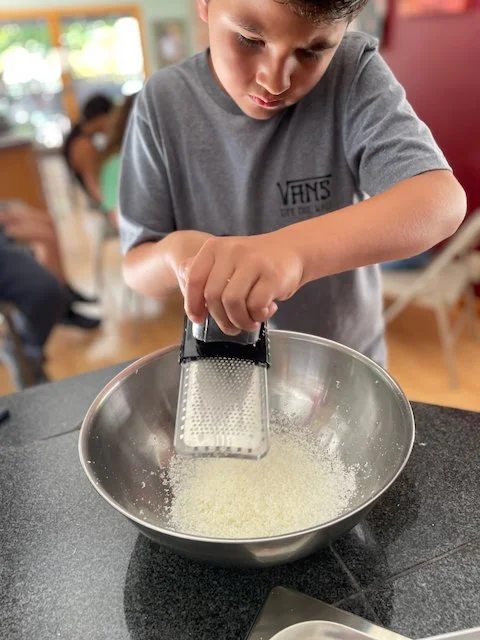
The journey of craft chocolate begins in the tropical rainforest, where Theobroma cacao trees produce vibrant pods directly from their trunks. Cultivating cacao requires immense manual labor and patience, taking five years for a tree to mature. Inside each pod lies nature’s prize: sweet white pulp enclosing 30 to 50 raw cacao seeds. Because cacao flavor profiles are deeply tied to regional soil and climate (terroir), this agricultural phase sets the genetic script for the final bar. Supporting the farming families who master this challenging art is the vital first step of CocoVie’s global community mission.
Fermentation
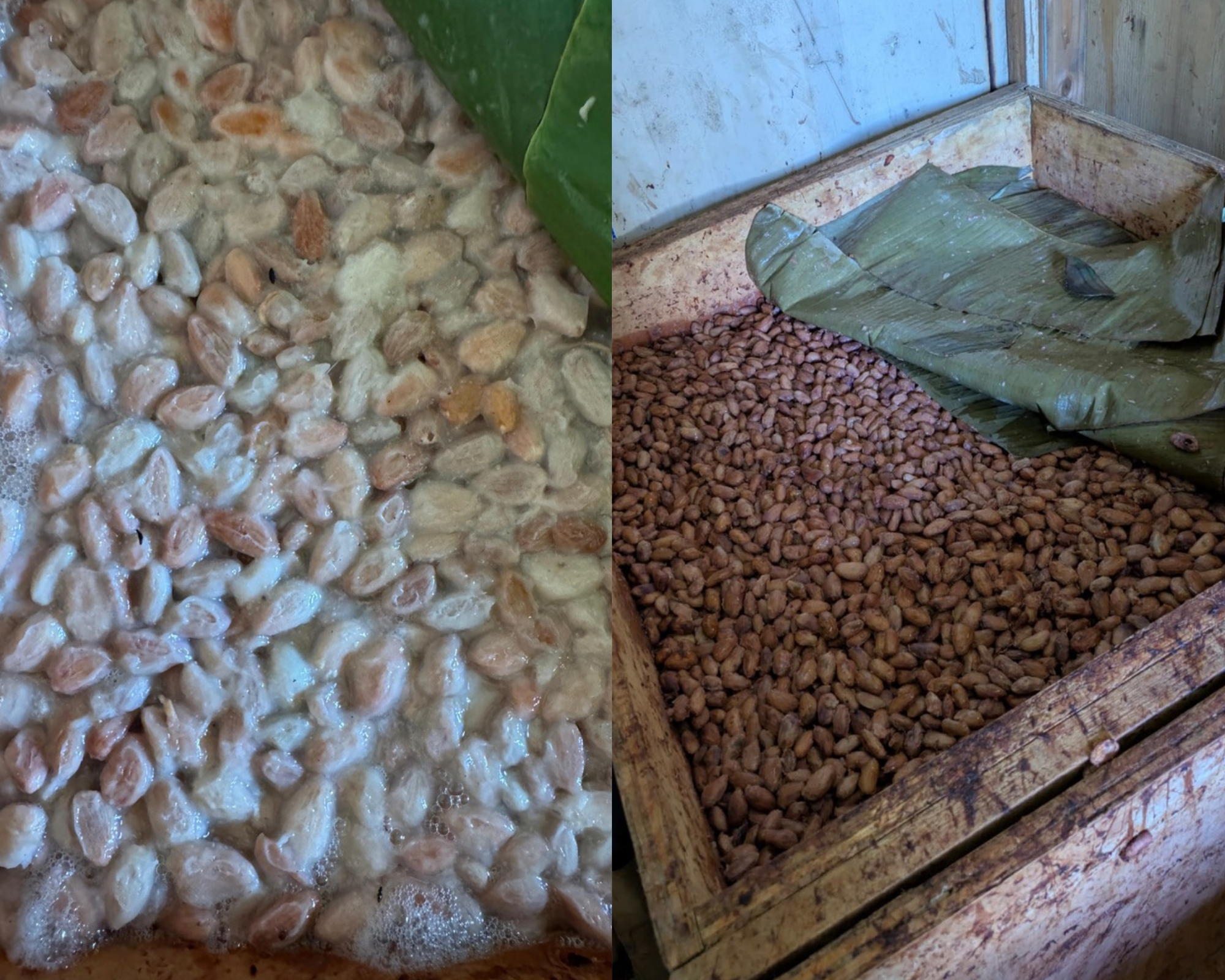
Fermentation is where raw agricultural produce transforms into true chocolate flavor. Immediately after harvest, farmers place wet, pulp-covered seeds into wooden sweatboxes. Over five to seven days, natural yeasts feast on the sugary pulp, driving temperatures up to 120°F (50°C). This process kills the seed germ, lowers bitterness, and unlocks essential flavor precursors. Master fermenters turn the beans deliberately to ensure even oxygen exposure and healthy fermentation. By seeking out growers that are skilled in this biochemical transformation, CocoVie ensures our chocolate honors the natural potential of the fruit and tastes amazing.

Roasting
Roasting is the magical stage where raw flavor precursors are unlocked, transforming earthy nibs into deeply aromatic chocolate. The dried cacao beans are roasted using custom temperature profiles tailored to each bean's origin. This heat triggers the Maillard reaction—reducing bitterness, driving off volatile acids, and synthesizing hundreds of complex flavor compounds. It also sterilizes the batch for absolute food safety. Watching the roaster requires a maker's sharp intuition, tracking, time, temperature, aroma, and taste until the kitchen fills with the intoxicating, unmistakable aroma of premium craft chocolate.
Refining
Refining makes the dramatic sensory leap from crunchy cacao nibs to silky, liquid luxury. The nibs are poured into a heavy-duty stone melanger, where heavy granite wheels crush the ingredients continuously for 24 to 72 hours. Friction generates natural heat, melting the bean's inherent cocoa butter into a glossy liquor. This relentless grinding breaks particles down to under 20 microns—smaller than the distance between human taste buds. Simultaneously, this smooths out the flavor by evaporating unwanted volatile acids, blending the ingredients into a perfectly velvety, sophisticated confection.

Molding
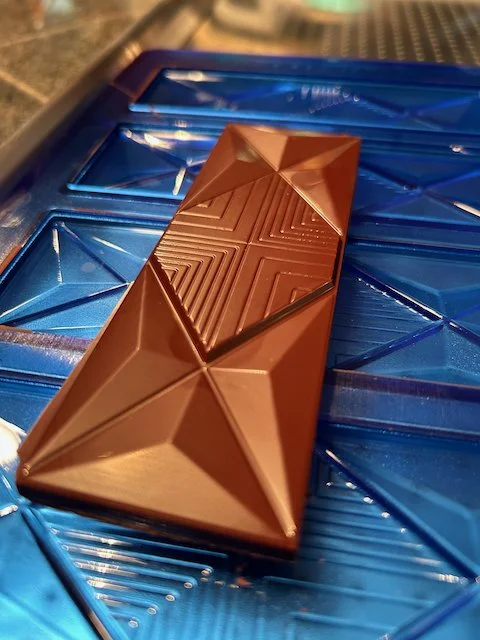
Once flawlessly tempered, the liquid chocolate is ready to be cast into its final shape. The chocolate is poured quickly into clean, polished polycarbonate bar molds before it cools. Once filled, the molds are placed onto a vibrating table. This rapid, continuous shaking forces trapped air bubbles to rise and pop, ensuring a dense, flawless bar free of internal pockets. The vibration also helps the liquid distribute evenly into every crisp corner and intricate detail of the mold, preparing the chocolate for a uniform cool down.
Drying
After fermentation, the cacao beans sit at a humid 60% moisture level. To safely stabilize and ship them without risk of spoilage, farmers slowly sun-dry the beans on raised beds or concrete patios for one to two weeks. The beans are raked continuously to ensure uniform drying and prevent mold. This slow reduction down to a stable 7% moisture content is crucial; it locks in the flavor precursors developed during fermentation and hardens the exterior shell. This careful preservation step ensures the raw beans safely endure their long journey to our production kitchen.

Cracking & Winnowing
When the dried cacao beans arrive at our kitchen, they are still encased in tough, papery husks. Once roasted, the cracking and winnowing process carefully separates these outer shells from the prized cacao inside. First, a mechanical cracker gently crushes the brittle husks and beans. Next, the mixture passes through a winnower, which applies a calibrated stream of air. Because the outer shells are light, the vacuum effortlessly draws them away, while the dense, flavor-rich cacao nibs drop safely into a collection bin below. This precise separation ensures a silky final texture completely free of unwanted bitterness.
Tempering with “Silk”
Even the smoothest refined chocolate cannot be molded without the scientific precision of tempering. Cocoa butter can crystallize into six different structures, but only one produces the glossy, snappy finish consumers love. To achieve this, we use a precise method involving a stable form of pre-crystallized cocoa butter known as "silk." Introduced into warm liquid chocolate, this silk acts as a molecular blueprint, instructing the batch to bond into a perfect crystalline matrix. This critical step guarantees a radiant sheen, a satisfying snap, and a smooth melt-in-your-mouth texture.
Packaging
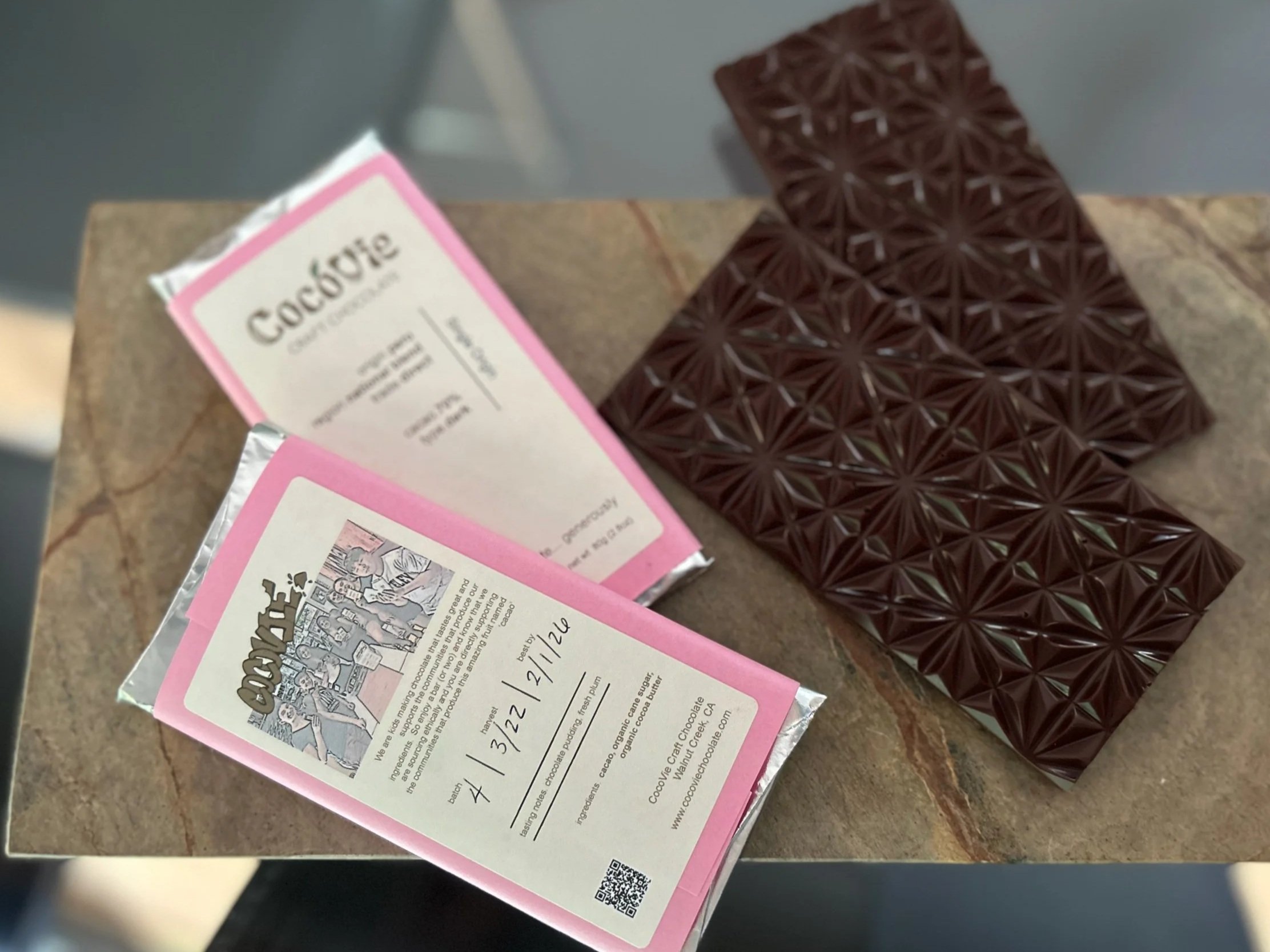
Packaging is the final step where our craft chocolate bar transforms from a kitchen creation into a powerful vehicle for our mission. Each bar is carefully inspected for quality, wrapped in a protective inner wrapper to preserve its complex flavor, and enclosed in its outer wrapper. The packaging proudly communicates our unique double impact: as a non-profit corporation, this wrapper informs the buyer that their purchase directly funds education and vital community support in the very regions where the cacao was grown, completing our bean-to-bar journey with purpose.